
• McCarthy Hyundai of Blue Springs

Blog / Blue Springs Hyundai Dealer

What to Do After a Car Accident in Blue Springs: Collision Repair Step by Step

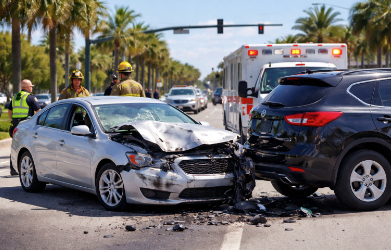
Car Accident in Blue Springs

Short answer: After a crash, check for injuries and call 911 if anyone is hurt. If no one is seriously injured and your car is drivable, Missouri law requires you to move it out of traffic. Then exchange information, photograph everything, report the accident to your insurer and get a professional repair estimate that includes your car's safety sensors.

Introduction

Even a minor fender-bender on I-70, Highway 7 or a busy Blue Springs parking lot can leave you shaken and unsure what to do next. And as Kansas City winter brings ice, snow and shorter days, the risk of a collision goes up.

This guide walks you through exactly what to do after a car accident in Blue Springs, from the first minutes at the scene to getting your car repaired the right way. It includes Missouri's reporting and insurance rules, so you can protect yourself, your claim and your vehicle.

This article is general information, not legal advice. For questions about fault, injuries or legal claims, contact your insurance company or an attorney.

Step 1: Check for Injuries and Call 911 if Needed

Your first priority is safety. Check yourself and your passengers, then the people in the other vehicle if it's safe to do so. Call 911 if anyone is hurt, if anyone complains of pain, or if the scene is dangerous, such as a fire, leaking fluids or a vehicle blocking a highway lane. Turn on your hazard lights.

Step 2: Move Out of Traffic if It's Safe

Missouri's Steer It, Clear It law (Sections 304.151 and 304.155 RSMo) says that if there are no apparent serious injuries or deaths and your vehicle is safe to drive, you must make every reasonable effort to move it to the shoulder so it doesn't block traffic.

Moving out of travel lanes helps prevent a second crash, especially on I-70 and other high-speed roads. Before you move, quickly snap a few photos of the vehicles' positions if you can do so safely.

Step 3: Contact the Police

Call the police, using 911 for emergencies, in any of these situations:

  • Anyone is injured
  • There's significant damage or a vehicle can't be driven
  • The other driver won't share information or appears impaired
  • You suspect the other driver is uninsured
  • It's a hit-and-run

The Missouri Department of Commerce and Insurance advises notifying police immediately if you're the victim of a hit-and-run driver or an uninsured motorist. Ask the responding officer for the report number.

Step 4: Exchange Information

Collect the following from every driver involved:

InformationWhy you need it
Full name and phone numberTo contact them during the claim
Insurance company and policy numberTo file a claim with their insurer
Driver's license numberTo confirm their identity
License plate numberTo identify the vehicle
Vehicle make, model and colorTo describe the vehicle in your claim
Location, date and timeFor your insurer and any police report

Stay calm and stick to the facts. Avoid arguing about or admitting fault at the scene; let the insurance companies review what happened.

Step 5: Document Everything

  • Photograph all vehicles from several angles, including close-ups of damage.
  • Capture the overall scene, traffic signs, skid marks and road or weather conditions.
  • Photograph the other driver's insurance card and license plate.
  • Get names and phone numbers of any witnesses.
  • Write down what happened while it's fresh in your mind.

Step 6: Report the Accident to Your Insurance Company

The Missouri Department of Commerce and Insurance recommends reporting an accident to your insurance company or agent right away. If you weren't at fault, you should also report it to the other driver's insurer. Follow your insurer's instructions for filing the claim. Under Missouri rules, insurers are required to handle claims promptly and fairly.

Missouri's minimum insurance requirements

Required coverageMinimum amount
Bodily injury liability$25,000 per person / $50,000 per accident
Property damage liability$25,000 per accident
Uninsured motorist (bodily injury)$25,000 per person / $50,000 per accident

Source: Missouri Department of Revenue. Many drivers carry higher limits plus collision and comprehensive coverage; check your own policy.

If the other driver is uninsured

According to the Missouri Department of Revenue, you may file an accident report (Form 1140) with the Department if the accident happened less than one year ago, involved an uninsured motorist, and caused more than $500 in property damage or any injury or death. If the Department sends you a notice requesting a report, you have 10 days from the mail date to file it.

Step 7: Get a Professional Repair Estimate

Damage is often worse than it looks. A crumpled bumper cover can hide broken brackets, damaged crash sensors or frame damage. Have a qualified collision repair shop inspect your vehicle and write a detailed estimate. Ask these questions:

  • Will you use Genuine Hyundai parts? Ask whether your estimate calls for original equipment (OEM) parts or aftermarket parts, and what your insurance policy covers.
  • Will you check the safety sensors? Hyundai SmartSense features, like Forward Collision-Avoidance Assist and Blind-Spot Collision Warning, rely on cameras and radar in the windshield, bumpers and grille. Ask whether they need inspection or recalibration after the repair.
  • Can I choose my shop? Your insurer may recommend a shop. Ask your insurer how your policy handles repairs at the shop you prefer.
  • Is the work warrantied? Get the repair warranty in writing.

Step 8: Arrange Transportation and Follow Up

  • Rental car: Check whether your policy includes rental reimbursement, or whether the at-fault driver's insurer will cover a rental.
  • Keep records: Save the police report number, claim number, estimates, photos, receipts and all correspondence.
  • Inspect the finished repair: Check paint match, panel gaps and that all warning lights are off before you drive away.
  • Check for recalls: While your car is in the shop, ask that any open recalls be completed too.

Keep This in Your Glove Box

  • Current insurance card (printed or on your phone)
  • Vehicle registration
  • A pen and notepad
  • Emergency contact numbers, including your insurer's claim line
  • Flashlight and reflective triangles or flares, especially for winter driving

Collision Repair at McCarthy in Blue Springs

McCarthy's collision team in Blue Springs handles everything from small dings to major damage, including:

  • Paintless dent repair, scratch removal and paint chip repair
  • Bumper, fender and side mirror replacement
  • Windshield repair and replacement
  • Frame straightening
  • Hail damage repair
  • Headlight restoration and wheel rim replacement

Our Hyundai service department is right here too, so mechanical issues found during a collision repair can be handled in the same visit. Learn more on our service and collision page.

Need Collision Repair in Blue Springs?

Call our collision team at (816) 224-7575 for an estimate, or schedule service online. McCarthy, 3000 NW South Outer Road, Blue Springs, MO 64015, serving drivers from Blue Springs, Grain Valley, Independence, Lee's Summit and Oak Grove.

Call Collision: (816) 224-7575 Schedule Service Get Directions

Frequently Asked Questions

Do I have to move my car after an accident in Missouri?

Under Missouri's Steer It, Clear It law (Sections 304.151 and 304.155 RSMo), if there are no apparent serious injuries or deaths and your vehicle is safe to drive, you must make every reasonable effort to move it to the shoulder so it does not block traffic.

Do I need to report a car accident to the state of Missouri?

If the accident involved an uninsured motorist and caused more than $500 in property damage or any injury or death, you may file an accident report with the Missouri Department of Revenue within one year. If the Department sends you a notice requesting a report, you have 10 days from the mail date to file it. You should also report the accident to your insurance company right away.

What car insurance is required in Missouri?

Missouri requires liability coverage of at least $25,000 per person and $50,000 per accident for bodily injury and $25,000 for property damage, plus uninsured motorist coverage of $25,000 per person and $50,000 per accident.

What should I do if the other driver has no insurance?

Call the police, collect as much information as you can and report the accident to your insurance company. If damage exceeds $500 or someone was injured, you can also report it to the Missouri Department of Revenue. Your uninsured motorist coverage may help pay for injuries.

Why do driver-assistance sensors need to be checked after a collision?

Many newer vehicles, including Hyundai models with SmartSense, use cameras and radar sensors in the windshield, bumpers and grille for features like forward collision-avoidance assist and blind-spot warning. Even a minor collision or a bumper or windshield replacement can affect them, so ask your repair shop whether the sensors need to be inspected or recalibrated.

Does McCarthy Hyundai Blue Springs do collision repair?

Yes. McCarthy's collision team can handle repairs including dent and scratch removal, bumper and fender replacement, windshield repair and replacement, frame straightening and hail damage repair. Call (816) 224-7575 to request an estimate.

Conclusion

A car accident is stressful, but knowing the steps makes it easier. Put safety first, move out of traffic when it's safe, call police when needed, exchange information, document the scene and report the accident to your insurer. Then get a thorough repair estimate that includes your car's safety sensors, and keep every record until the claim is closed.

When you're ready for repairs, McCarthy's collision team in Blue Springs is here to help. Call (816) 224-7575 to get started.

Posted in:

Related Posts

hyundai palisade

Buying a Used Hyundai Palisade Near Kansas City: What to Look For

Short answer: A used Palisade is one of the best values in a three-row SUV, with seating for up to eight and up to 5,000 lbs of towing on V6 models. Focus on 2023 to 2025 models for the refreshed design and more standard tech, or 2020 to 2022 to save money. On any year, confirm two recalls are done by VIN: the tow hitch harness recall (2020 to 2022) and the seat belt buckle recall (2020 to 2025). Introduction The Hyundai Palisade has been a favorite with Kansas City families since it launched for 2020. It offers a roomy three-row cabin, a smooth V6 and upscale features for the money. Because it's so popular, there's a steady supply of used Palisades around the metro, from early SE models to loaded Calligraphy trims. This guide explains how the Palisade changed from year to year, which recalls to check, what to inspect on a test drive, and how a Hyundai Certified Used Palisade can add peace of mind. Use it before you shop in Blue Springs, Lee's Summit, Independence or anywhere around Kansas City. Palisade Model Years at a Glance Model years Generation Engine Key details 2020–2022 1st gen, original styling 3.8L V6, 291 hp, 8-speed automatic Lowest prices; check tow hitch harness recall 2023–2025 1st gen, refreshed 3.8L V6, 291 hp, 8-speed automatic New grille and lighting, standard 12.3-in touchscreen, XRT trim added 2026–newer 2nd gen, all-new 3.5L V6, 287 hp; or 2.5L turbo hybrid, 329 hp Larger body, first hybrid, seating for up to 9 Specs vary by trim and options. Confirm details for any specific vehicle by VIN. 2020–2022 Palisade: The Value Pick The original Palisade set the tone with a quiet ride, a 291-hp 3.8L V6, an 8-speed automatic and towing capacity of up to 5,000 lbs when properly equipped. Seating is seven with second-row captain's chairs or eight with a bench. These years are typically the most affordable. Some had smaller standard touchscreens on lower trims, so check which infotainment screen the specific vehicle has. Pay special attention to recalls on these years (see below). 2023–2025 Palisade: The Sweet Spot For 2023, Hyundai gave the Palisade a significant refresh: New grille, lighting and wheel designs, plus an updated dashboard and steering wheel A 12.3-inch navigation touchscreen became standard across the lineup Rear side-impact airbags became standard Highway Driving Assist became standard, with Highway Driving Assist 2 on upper trims More USB-C charging and stronger wireless charging A new rugged-looking XRT trim The same 3.8L V6 and 5,000-lb towing rating carried over. For many buyers, a 2023 to 2025 Palisade is the best balance of modern features and used-car value. 2026 and Newer: The All-New Palisade The 2026 Palisade is a full redesign with a larger, boxier body and a roomier cabin. It replaces the 3.8L V6 with a 287-hp 3.5L V6 and adds the first Palisade hybrid, a 2.5L turbo hybrid rated at 329 hp. Some trims offer seating for up to nine with a convertible front center seat. Gas V6 models tow up to 5,000 lbs; hybrids tow up to 4,000 lbs. Late-model 2026 Palisades are starting to appear as used vehicles and retired loaners. Learn more on our 2026 Palisade Hybrid page. Recalls to Check on Any Used Palisade Every vehicle has recalls; what matters is that the repairs are done. Before you buy, enter the 17-character VIN at NHTSA.gov/recalls or ask the dealership's service department to confirm all recalls are complete. Here are notable Palisade recalls from NHTSA records: NHTSA campaign Model years Issue 22V-633 2020–2022 Water can enter the accessory tow hitch harness module and cause a short circuit, increasing fire risk even when parked. Owners were advised to park outside until repaired. 25V-607 2020–2025 Seat belt buckles may fail to latch. 21V-840 2021 Contaminated brake fluid may affect master cylinder seals and reduce braking performance. 23V-180 2021–2023 Wiper motor may stop working when snow or ice builds up on the windshield. 23V-415 2023 Brake booster issue may cause loss of power brake assist. 24V-106 2024 Engine valve springs may break, causing loss of drive power. 25V-291 2025 Moisture in the electric oil pump controller may cause a short and fire risk. Not a complete list. Recalls apply only to specific VINs within each model year. Recall repairs are free at authorized Hyundai dealers. Check NHTSA.gov/recalls for the latest information. Recall work can be completed at our Blue Springs service department, even if you didn't buy the vehicle from us. Used Palisade Inspection Checklist Run the VIN for recalls and get proof that open recalls are completed. Review the service history. Look for regular oil changes and recommended maintenance. Test every seat belt. Make sure each buckle latches and releases properly. Check the transmission. Shifts should be smooth, with no slipping, harsh engagement or warning lights. Confirm the drivetrain. Find out if the vehicle is front-wheel drive or HTRAC all-wheel drive, which matters for Kansas City winters. Inspect the tow hitch if equipped, and ask whether recall 22V-633 was performed on 2020 to 2022 models. Check the second and third rows. Confirm captain's chairs or bench, test seat-folding mechanisms and look for wear from kids and car seats. Test the tech. Try the touchscreen, Apple CarPlay or Android Auto, cameras, parking sensors and climate controls in all three rows. Look at tires and brakes. A three-row SUV is heavy, so check tread depth and brake pad life. Get a vehicle history report and look for accidents, flood damage or title issues. Why Consider a Certified Used Palisade? A Hyundai Certified Used Palisade adds protection that a regular used Palisade doesn't have: Benefit Hyundai Certified Used Vehicle Eligibility 6 model years old or newer, 80,000 miles or less Inspection 173-point inspection Powertrain warranty 10 years/100,000 miles from the original in-service date Comprehensive warranty Remainder of the 5-year/60,000-mile new vehicle warranty Roadside assistance 10 years/unlimited miles Deductible $50 per repair visit Coverage details and limitations apply. Ask for the full terms on any specific vehicle. See the full program on our Hyundai Certified Used Vehicles page. Which Used Palisade Is Right for You? Best value: 2020 to 2022 SEL or Limited, with recalls confirmed complete. Best overall: 2023 to 2025, for the refreshed design and standard 12.3-inch screen. Most luxury: Calligraphy trim, with premium interior materials and top features. Most rugged look: 2023 to 2025 XRT. Best fuel economy: 2026 Palisade Hybrid, if your budget allows a newer model. Still deciding between brands? Read our Hyundai Palisade vs. Kia Telluride comparison. Find Your Used Palisade in Blue Springs Browse used and certified Palisades at McCarthy Hyundai Blue Springs. Ask us for the VIN, recall status and service history on any vehicle, and we'll walk you through it. We serve families across Blue Springs, Lee's Summit, Independence and the Kansas City area. Call (816) 224-7500. Shop Used Palisade Certified Used Get Pre-Qualified Frequently Asked Questions What is the best year to buy a used Hyundai Palisade? Many shoppers target 2023 to 2025 models. The 2023 refresh brought updated styling, a standard 12.3-inch navigation touchscreen, standard rear side-impact airbags and Highway Driving Assist on every trim. The 2020 to 2022 models usually cost less and use the same 291-hp 3.8L V6. Whatever year you choose, confirm all recalls are complete for that VIN. What are the most important recalls on a used Palisade? Key recalls include the tow hitch harness module recall on 2020 to 2022 models (NHTSA 22V-633), which carried a fire risk and a recommendation to park outside until repaired, and a seat belt buckle recall covering 2020 to 2025 models (25V-607). Check any specific vehicle's VIN at NHTSA.gov/recalls to see which recalls apply and whether they have been completed. How much can a used Hyundai Palisade tow? First-generation Palisades from 2020 to 2025 with the 3.8L V6 are rated to tow up to 5,000 pounds when properly equipped. On the redesigned 2026 Palisade, the 3.5L V6 tows up to 5,000 pounds and the hybrid tows up to 4,000 pounds. How many seats does a used Palisade have? First-generation Palisades seat seven with second-row captain's chairs or eight with a second-row bench, depending on trim and options. Check the second-row layout of any specific vehicle before you buy. Can I buy a certified used Hyundai Palisade? Yes, if the vehicle qualifies. Hyundai Certified Used Vehicles must be six model years old or newer with 80,000 miles or less and pass a 173-point inspection. They come with a 10-year/100,000-mile powertrain limited warranty from the original in-service date and the remainder of the 5-year/60,000-mile new vehicle warranty, with a $50 deductible per repair visit. What changed on the 2026 Palisade? The 2026 Palisade is a full redesign with a larger, boxier body, a new 287-hp 3.5L V6, and the first Palisade hybrid, a 2.5L turbo hybrid rated at 329 hp. Some trims offer seating for up to nine with a front center seat. Conclusion A used Hyundai Palisade gives Kansas City families three rows of space, a strong V6 and plenty of features for less than buying new. Choose 2020 to 2022 for the lowest price, 2023 to 2025 for the best mix of value and modern tech, or 2026 for the all-new design and hybrid option. Whatever year you pick, confirm recalls by VIN, review the service history and consider a Hyundai Certified Used Palisade for extra peace of mind. Ready to shop? See Palisade options near Kansas City or visit McCarthy Hyundai Blue Springs for a test drive.

Hyundai Sonata vs Elantra

Hyundai Sonata vs. Elantra: Which Sedan Fits Independence Commuters?

Short answer: Choose the Elantra if you want the lowest price and best fuel economy: it starts at $22,825 and gets 35 mpg combined. Choose the Sonata if you want more power, a bigger trunk and available all-wheel drive: it starts at $27,600 with 191 hp. Both come with the same Hyundai warranty. Introduction If you live in Independence and commute to downtown Kansas City, the Truman Sports Complex area or out toward Lee's Summit, you spend a lot of time on I-70, I-470 and US-24. A comfortable, efficient sedan makes those drives easier and cheaper. Hyundai offers two great options: the compact Elantra and the midsize Sonata. They look similar, but they're built for different priorities. This guide compares the 2026 Elantra and 2027 Sonata, the newest model year of each on Hyundai's site, on price, fuel economy, power, space, all-wheel drive and features, so you can pick the right one for your commute. Sonata vs. Elantra at a Glance Spec 2026 Elantra 2027 Sonata Class Compact sedan Midsize sedan Starting MSRP $22,825 (SE) $27,600 (SE) Standard engine 2.0L 4-cyl, 147 hp 2.5L 4-cyl, 191 hp EPA mpg, base trim (city / hwy / combined) 31 / 40 / 35 26 / 38 / 31 Performance trim N Line: 1.6L turbo, 201 hp N Line: 2.5L turbo, 290 hp Hybrid available Yes, up to 54 mpg combined Yes, up to 47 mpg combined All-wheel drive Not available Available on SEL Sport Overall length 185.4 in 193.3 in Wheelbase 107.1 in 111.8 in Rear legroom 38.0 in 34.8 in Trunk space 14.2 cu ft 15.6 cu ft Touchscreen, base trim 8 in 12.3 in MSRPs exclude freight, tax, title and license fees. EPA figures are estimates; actual mileage varies. Specs from Hyundai as of October 2026. Price and Trims 2026 Elantra trim Starting MSRP 2027 Sonata trim Starting MSRP SE $22,825 SE $27,600 SEL Sport $23,950 SEL Sport $29,400 SEL Sport Plus $24,450 Hybrid from $29,450 SEL Sport Premium $25,275 N Line $36,300 Limited $27,375 N Line $29,600 The Elantra costs $4,775 less to start. In fact, a well-equipped Elantra Limited, with Bose audio and Highway Driving Assist, costs less than the base Sonata. If budget is your top priority, the Elantra gives you more features for the money. Fuel Economy and Commuting Costs For a daily commuter, fuel economy adds up. Here's a simple comparison of the base gas trims, assuming 12,000 miles a year and $3.00 gas. Model Combined mpg Gallons per year Fuel cost per year 2026 Elantra SE 35 343 $1,029 2027 Sonata SE 31 387 $1,161 Illustration only. Your costs depend on your mileage, gas prices and driving style. The Elantra saves about $130 a year on fuel in this example. If you want the lowest fuel bill of all, the Elantra Hybrid Blue is rated up to 54 mpg combined. Read our 2026 Elantra Hybrid price, MPG and trims guide. The Sonata Hybrid, rated up to 47 mpg combined, is a strong choice if you want midsize comfort with hybrid efficiency. Power and Driving Feel The Sonata's standard 2.5-liter engine makes 191 horsepower, 44 more than the Elantra's 147-hp 2.0-liter, and it uses an 8-speed automatic. That extra power makes merging onto I-70 and passing on I-470 feel more relaxed, especially with passengers aboard. Want something sportier? The Sonata N Line has a 290-hp turbocharged engine, while the Elantra N Line has a 201-hp turbo and a 7-speed dual-clutch transmission with paddle shifters. Space and Comfort The Sonata is about 8 inches longer and has a 4.7-inch longer wheelbase, which helps it ride smoothly on the highway. Its trunk is also larger at 15.6 cubic feet, versus 14.2 in the Elantra. One surprise: Hyundai lists more rear legroom in the Elantra, 38.0 inches versus 34.8 in the Sonata. If you regularly carry adults or teenagers in the back seat, sit in both before you decide. The Sonata's sleek, sloping roofline also affects rear headroom for taller passengers. All-Wheel Drive for Missouri Winters This is one of the biggest differences. The Sonata SEL Sport is available with HTRAC all-wheel drive, rated at 22 city, 32 highway and 26 mpg combined. The Elantra is front-wheel drive only. Front-wheel drive with good winter tires handles most Kansas City winters well. But if you leave early in the morning on untreated side streets or simply want extra confidence on snow and ice, the AWD Sonata is the only Hyundai sedan that offers it. Technology and Features Sonata: Every trim has a 12.3-inch touchscreen. The SEL Sport adds a wireless phone charger, heated front seats, an 8-way power driver's seat and dual automatic climate control. The N Line adds navigation, a 12.3-inch digital cluster, 12-speaker Bose audio and Highway Driving Assist. Elantra: The base SE has an 8-inch touchscreen with wireless Apple CarPlay and Android Auto. The SEL Sport Plus adds a sunroof, heated front seats and wireless charging. The SEL Sport Premium adds Smart Cruise Control with Stop & Go, and the Limited adds Bose audio and Highway Driving Assist. Warranty Both sedans come with the same Hyundai coverage: a 5-year/60,000-mile new vehicle limited warranty, a 10-year/100,000-mile powertrain limited warranty, a 7-year/unlimited-mile anti-perforation warranty and 5-year/unlimited-mile 24/7 roadside assistance. Warranty coverage has conditions and exclusions, and some coverage applies only to the original owner. Which Sedan Should You Choose? Choose the Elantra if you: Want the lowest price and best gas mileage Commute alone or with one passenger most days Want more rear legroom in a smaller, easy-to-park car Are interested in a hybrid rated up to 54 mpg Choose the Sonata if you: Want more power for highway merging and passing Want available all-wheel drive Want a larger trunk and a 12.3-inch screen on every trim Prefer a larger, midsize sedan with a smoother highway ride Drive Both Back to Back The easiest way to choose is to drive the Elantra and Sonata on the same day. McCarthy Hyundai Blue Springs is a short drive east of Independence on I-70, and we'll have both ready for you. Call (816) 224-7500. Shop Elantra Shop Sonata Schedule a Test Drive Frequently Asked Questions Is the Sonata bigger than the Elantra? Yes. The Sonata is 193.3 inches long versus 185.4 inches for the Elantra, and its wheelbase is 4.7 inches longer. The Sonata also has a larger trunk at 15.6 cubic feet versus 14.2. However, Hyundai lists more rear legroom for the Elantra: 38.0 inches versus 34.8 inches in the Sonata. Which gets better gas mileage, the Sonata or the Elantra? The Elantra. The 2026 Elantra SE is EPA-rated at 31 city, 40 highway and 35 mpg combined, while the 2027 Sonata SE is rated 26 city, 38 highway and 31 combined. The Elantra Hybrid Blue is rated up to 54 mpg combined, and the Sonata Hybrid is rated up to 47 mpg combined. How much more does the Sonata cost than the Elantra? The 2027 Sonata SE starts at $27,600 MSRP and the 2026 Elantra SE starts at $22,825 MSRP, a difference of $4,775 before freight, taxes and fees. Does the Sonata or Elantra come with all-wheel drive? The 2027 Sonata SEL Sport is available with HTRAC all-wheel drive. The Elantra is front-wheel drive only. If you want AWD in a Hyundai sedan for Missouri winters, the Sonata SEL Sport is the choice. Which is more powerful, the Sonata or the Elantra? The Sonata. Its standard 2.5-liter engine makes 191 horsepower, compared with 147 horsepower from the Elantra's standard 2.0-liter engine. The Sonata N Line makes 290 horsepower, while the Elantra N Line makes 201 horsepower. Do the Sonata and Elantra have the same warranty? Yes. Both come with Hyundai's 5-year/60,000-mile new vehicle limited warranty, 10-year/100,000-mile powertrain limited warranty, 7-year/unlimited-mile anti-perforation warranty and 5-year/unlimited-mile 24/7 roadside assistance. Conclusion The Elantra and Sonata are both excellent commuter sedans backed by the same Hyundai warranty. The Elantra wins on price, fuel economy and rear legroom, making it the smart pick for budget-minded commuters. The Sonata wins on power, trunk space, standard screen size and available all-wheel drive, making it the better fit if you want a roomier midsize sedan with extra winter confidence. Ready to compare in person? Visit McCarthy Hyundai Blue Springs, just east of Independence on I-70, or learn more on our Hyundai dealer serving Independence page.

Retired Service Loaner for Sale in Blue Springs

What Is a Retired Service Loaner? Savings, Warranty & What to Check

Short answer: A retired service loaner is a late-model car that a dealership lent to service customers and then retired from its loaner fleet to sell. It usually has low miles and a full dealer service history, and it's typically priced below a comparable new car. The key thing to check is the in-service date, because the factory warranty clock started when the car became a loaner, not when you buy it. Introduction If you've browsed our inventory, you may have seen vehicles labeled "retired loaner" or "retired demo." They often look brand new, have only a few thousand miles, and cost less than the same model fresh off the truck. It's natural to wonder what the catch is. There isn't a catch, but there are trade-offs worth understanding. This guide explains what a retired service loaner is, how it compares with new, used and certified vehicles, how the warranty works, and a checklist of what to look for before you buy one in Blue Springs. What Is a Retired Service Loaner? When you bring your car in for service, many dealerships offer a loaner vehicle so you can keep your day moving. Those loaners are usually current or recent model-year vehicles. After a period of time or a certain number of miles, the dealership retires them from the loaner fleet and offers them for sale. Because they've been part of the dealership's own fleet, retired loaners are typically maintained on schedule by the same service department that works on customer vehicles. Retired loaner vs. demo vs. used vs. certified Type How it was used Typical miles Price vs. new New Never titled or put into service Delivery miles only Full price, all new-car incentives Retired service loaner Lent to service customers Low Typically lower Retired demo Test drives or staff use Low Typically lower Certified used Previously owned or leased; passed a manufacturer inspection Varies (Hyundai: 80,000 or less) Lower, with added warranty Used Previously owned or leased Varies widely Lower Why Retired Loaners Cost Less They've been put into service. Once a vehicle has been registered and driven as a loaner, it can no longer be sold as a never-used new car in the usual way, so it's priced below a comparable new one. They have some miles. Even a few thousand miles changes how the vehicle is valued. Some warranty time has been used. The factory warranty clock started when the car went into service. In return, you usually get a late-model vehicle with current features and safety technology, low mileage, and a documented service history, for less than buying new. How the Warranty Works on a Retired Loaner This is the most important part to understand. Factory warranty coverage is generally counted from the vehicle's original in-service date, the day the dealership first put it into service, not the day you buy it. Example Say a loaner went into service in January 2026, and you buy it in November 2026 with 6,000 miles. Hyundai's 5-year/60,000-mile new vehicle limited warranty would run until January 2031 or 60,000 miles on the odometer, whichever comes first. You'd have about 4 years and 2 months and 54,000 miles of that coverage left. Illustrative example only. Actual coverage depends on the specific vehicle's in-service date, mileage and the warranty terms that apply to it. Hyundai Certified Used coverage How a retired loaner is sold affects your coverage. If the vehicle is sold as a Hyundai Certified Used Vehicle, it comes with these benefits from Hyundai's program: Benefit Hyundai Certified Used Vehicle Eligibility 6 model years old or newer, 80,000 miles or less Inspection 173-point inspection Comprehensive warranty Remainder of the 5-year/60,000-mile new vehicle warranty, from the original in-service date Powertrain warranty 10 years/100,000 miles from the original in-service date Deductible $50 per repair visit Roadside assistance 10 years/unlimited miles, 24/7 Rental car reimbursement $35/day, up to 10 days, for covered powertrain repairs Coverage details and limitations apply. Ask our team for the full terms on any specific vehicle. Not every retired loaner is sold as Hyundai Certified, so always ask. Learn more about the program on our Hyundai Certified Used Vehicles page. Pros and Cons of Buying a Retired Loaner Pros Cons Typically priced below a comparable new vehicle Some factory warranty time and miles already used Low miles on a current or recent model year Driven by multiple people, so check for minor wear Maintained by a dealership service department Limited choice of colors, trims and options Documented service history May not qualify for every new-car incentive or rate Available now, no factory order wait Popular models sell quickly Checklist: What to Check Before You Buy In-service date. Ask for it in writing. It tells you how much warranty time is left. Exact mileage. Compare it with the in-service date to see how hard the car was used. Remaining warranty coverage. Ask the dealership to confirm by VIN which coverage applies and when it ends. Certified status. Find out whether the vehicle is sold as Hyundai Certified Used, and get the documentation. Service records. Request the maintenance history, including oil changes and tire rotations. Open recalls. Enter the VIN at NHTSA.gov/recalls, or ask service to confirm all recalls are complete. Condition. Look closely at seats, carpets, wheels and bumpers for wear from multiple drivers. Tires and brakes. Check tread depth and ask about brake pad life. Incentives and financing. Ask which offers and interest rates apply. Rates and incentives for new and used vehicles can differ. The paperwork. Review the window sticker or Buyers Guide and the sales contract before you sign. Is a Retired Loaner Right for You? Choose a retired loaner if you want a nearly new vehicle with current features, are flexible on color and trim, and want to spend less than new. Choose new if you want the full warranty starting on your purchase date, a specific color or trim, or a new-car financing offer. Choose certified used if you want the extended powertrain coverage and a wider range of model years and prices. Comparing certified and new? Read our guide on certified pre-owned vs. new Hyundai. See Retired Loaners at McCarthy Hyundai Browse our current retired loaner and demo inventory, then ask us for the in-service date, mileage and warranty details on any vehicle. We'll show you exactly what coverage is left before you decide. Call (816) 224-7500. Shop Retired Loaners Certified Used Get Pre-Qualified Frequently Asked Questions What is a retired service loaner? A retired service loaner is a current or recent model-year vehicle that a dealership used as a free loaner car for service customers and then removed from its loaner fleet to sell. These vehicles usually have low miles and have been maintained by the dealership's service department. Is it a good idea to buy a retired loaner car? For many buyers, yes. A retired loaner is typically priced below a comparable new vehicle, has low miles and has a documented service history. The trade-offs are that some factory warranty time has already been used and the car has had multiple drivers, so check its condition, mileage, in-service date and remaining warranty before you buy. When does the warranty start on a retired loaner? Factory warranty coverage is generally counted from the vehicle's original in-service date, which is when the dealership first put it into service as a loaner, not the date you buy it. Ask for the in-service date so you know exactly how much time and mileage is left. Does a retired Hyundai loaner get the 10-year/100,000-mile powertrain warranty? It depends on how the vehicle is sold. A Hyundai Certified Used vehicle receives a 10-year/100,000-mile powertrain limited warranty from the original in-service date, plus the remainder of the 5-year/60,000-mile new vehicle warranty, with a $50 deductible per repair visit. Ask whether a specific retired loaner is Hyundai Certified and get the coverage details in writing. What is the difference between a retired loaner and a demo car? A service loaner is lent to service customers while their cars are being repaired. A demo is typically used by the dealership for test drives or driven by staff. Both are late-model vehicles with some miles, and both are usually priced below a comparable new car. How can I check a retired loaner for recalls? Enter the vehicle's 17-character VIN at NHTSA.gov/recalls to see any open safety recalls. You can also ask the dealership's service department to confirm that all recalls and service campaigns have been completed. Conclusion A retired service loaner can be one of the smartest ways to get a nearly new car for less. You get a late-model vehicle with low miles and a dealer-maintained history, typically at a lower price than new. Just remember that the warranty clock started on the in-service date, so ask for that date, confirm the remaining coverage and find out whether the vehicle is Hyundai Certified before you buy. Ready to look? Browse retired loaners or visit McCarthy Hyundai Blue Springs and ask our team for the full details on any vehicle.